
What is pressure canning? Guide for beginners

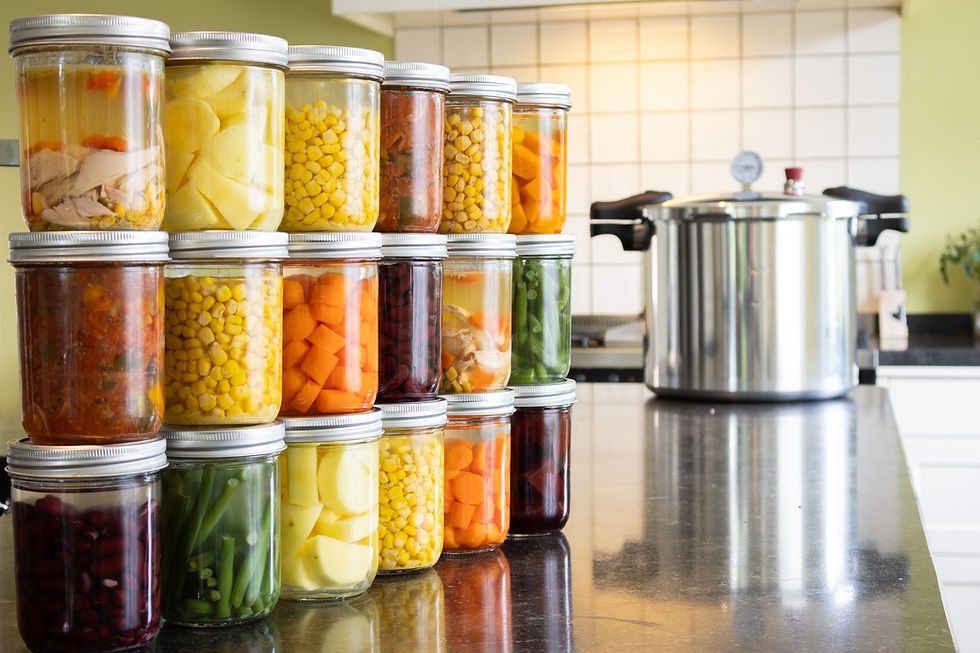
If you’ve never heard of pressure canning before, you’re definitely not alone. In Europe, it’s still relatively unknown—but that will likely change soon.
Just imagine this:
meals that last for months to years
shorter cooking times
no freezer needed
always having food in stock
enjoying your harvest all year round
Sounds good, right?
What exactly is pressure canning?
Pressure canning is a method of preserving food using high pressure and temperature. It’s sometimes referred to as “pressure preserving” or “pressure cooking for preservation.” For this, you use a special pot: a pressure canner.
Because pressure canning works with high pressure, the temperature inside the pot gets higher than in a regular pot—and that’s essential for safely preserving vegetables, meat, and fish.
Only at temperatures of at least 115°C (239°F) are all dangerous bacteria and their spores (such as botulism) destroyed.
That makes pressure canning the safest method for preserving:
meat
fish
complete meals
vegetables (which generally have low acidity)
What’s the difference from traditional water bath canning?
You might be thinking: “Isn’t this just regular water bath canning?”
While both methods preserve food, there are important differences.
Water bath canning:
This method is done in a water bath canner. The maximum temperature you can reach is 100°C (212°F). This is perfectly fine for fruit, but when you preserve vegetables, meat, or fish this way, there’s still a risk that harmful bacteria—like botulism—remain in the food.
And that can make you seriously ill.
Botulism spores, for example, are only destroyed at temperatures of 115°C (239°F). This means that if you preserve vegetables, meat, or fish using a water bath, you must boil the food for at least 10 minutes before eating it safely. This can make vegetables very soft.
Pressure canning:
With pressure canning, you cook under pressure. This raises the temperature inside the pot to at least 115°C (239°F). At this temperature, all bacteria and their spores—including botulism—are destroyed.
The advantage is that you don’t need to boil your food for 10 minutes before eating it. You only need to reheat it briefly.
You can even eat it cold, straight from the jar. Corn or beets, for example, can go directly into a salad.
Pressure canning
With pressure canning, you cook with pressure. This raises the temperature inside the pot to at least 115°C (239°F). At this temperature, all bacteria and their spores—including botulism—are destroyed.
The advantage is that you don’t need to boil your food for 10 minutes before eating it. You only need to reheat it briefly.
You can even eat it cold, straight from the jar. Corn or beets, for example, can go directly into a salad.

Why are more and more people choosing pressure canning?
Simply because it’s very practical:
shorter cooking times
better texture (no mushy vegetables)
safer preservation method
no freezer needed
always a meal ready
less food waste
ideal for meal prep
enjoy your harvest all year round
And honestly, it also brings peace of mind to have a stocked pantry.
What do you need to get started?
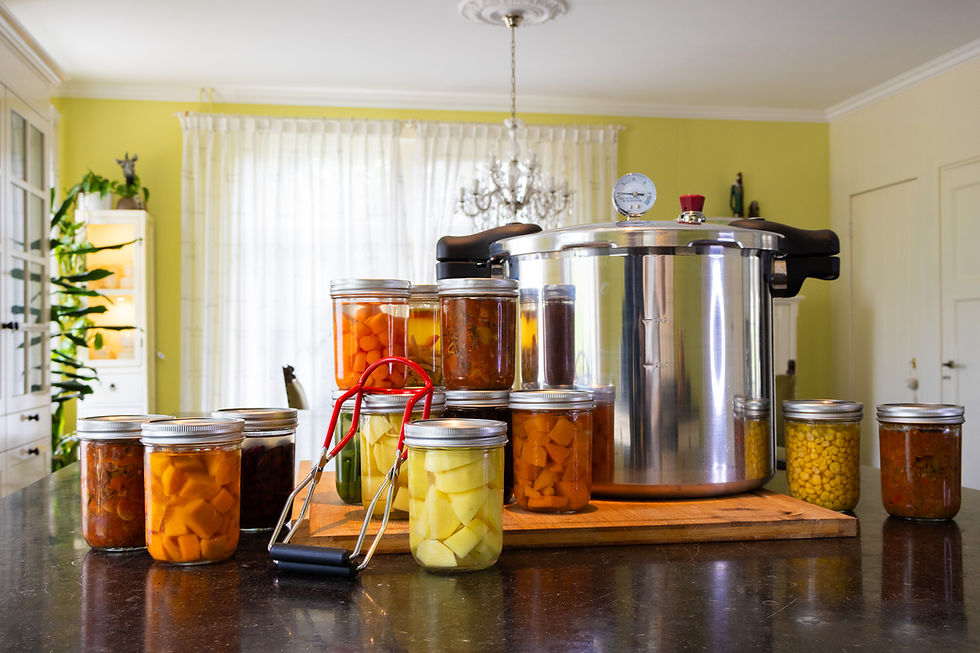
You don’t need much, but you do need the right basics:
glass jars
jarlifter
some basic knowledge
We can help you with that knowledge. We offer a pressure caning recipe e-book and a digital course Pressure Canning where you’ll learn both the theory and the practical steps. But you don’t need to know everything in detail to get started.
The steps of pressure canning are simple. If you use a recipe designed for pressure canning and follow the steps carefully, anyone can do it.
Tip: start simple—don’t begin with a complicated recipe.
How does it work in general?
In short:
you fill your jars
you place them in the pressure canner
you build up pressure
you set the timer according to your recipe (find the times here)
you let everything cool down slowly
And that’s it!
Your preserved food can be stored in your pantry for at least a year..
Finally
Pressure canning may be new to you, but it’s a proven method that has been used worldwide for many years. And once you get the hang of it, you’ll probably never want to go back.
In the next articles, I’ll guide you step by step so you can start doing it yourself.

Comments